
8 hr
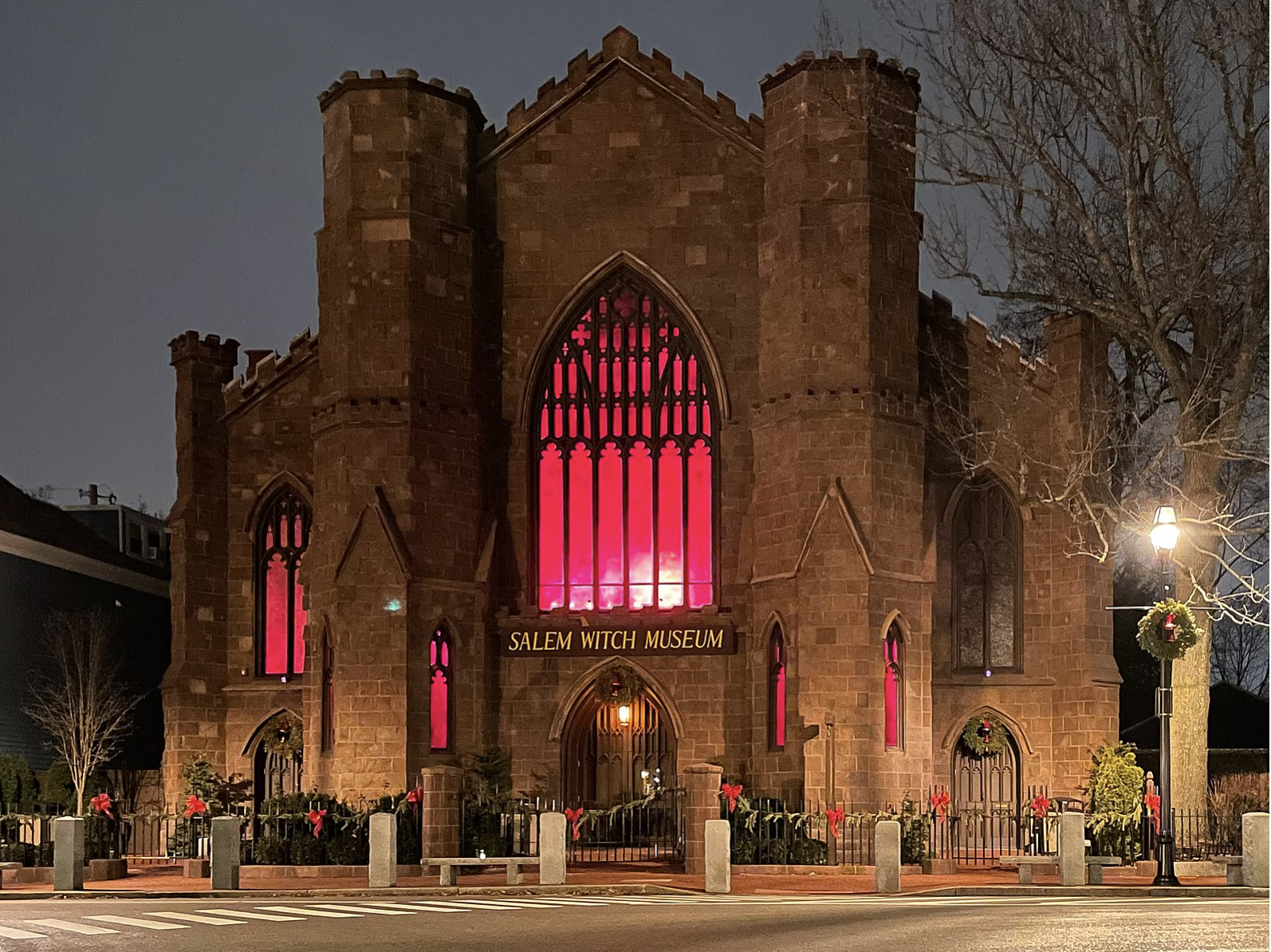
Salem Witch Trials & Maritime Heritage Day Tour
Uncover the dark history of the 1692 witch trials and Salem's colonial seafaring legacy on this full-day guided excursion.
Reserve

Hand-picked by our editors — only the best 5 experiences from 47 reviewed.
Verified partners for every tour, free cancellation where available, and instant confirmation on every booking.
8 hr
Uncover the dark history of the 1692 witch trials and Salem's colonial seafaring legacy on this full-day guided excursion.
Reserve
2 hr 30 min
Round-trip train journey plus guided 2.5-hour walk through witch trial sites and maritime landmarks
Reserve
2 hr 30 min
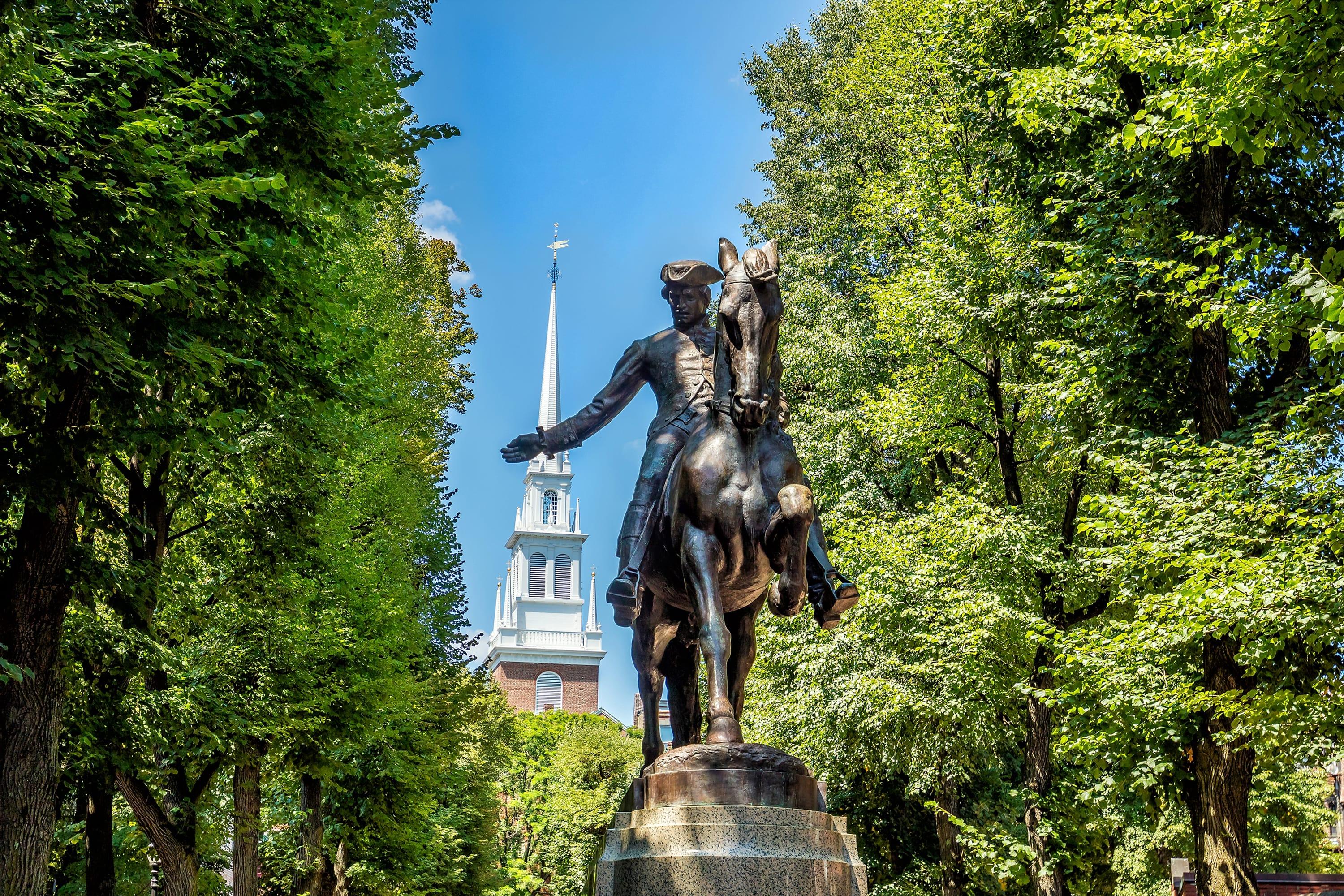
Explore Revolutionary Boston's most iconic sites on an intimate walk through history
ReservePrices from verified partners. Availability updates in real time at checkout. Free cancellation policies apply where shown.
The landmarks, rooms, and views travelers on this tour remember — all visible on a single visit.
Twenty cantilevered benches represent the victims with their names and execution dates engraved.
Sculptural tribute to 1692 victims
The stone threshold features victims' final protests of innocence cut off mid-sentence to symbolize their pleas being ignored.
Historic stone threshold engravings
Six locust trees were planted within the space as they are known for being the last to bloom and first to lose leaves.
Locust trees memorial landscape
The Charter Street Cemetery serves as a silent, historic witness to the trials.
Old Burying Point cemetery stones
Organized experiences provide deep historical context for those prioritizing narrative, while independent exploration offers the best schedule adaptability for a salem witch trials tour from boston.
| Feature | Top pick Guided Tour | Independent Trip |
|---|---|---|
Logistical Effort |
Low (transportation handled) | High (requires planning) |
Historical Context |
Narrative-driven storytelling | Self-guided research |
Flexibility |
Fixed departure times | High (go at own pace) |
Cost of Transit |
Included in package | Variable train/car fees |
Expert Access |
Direct Q&A with guides | None (memorial signage only) |
Expertise |
Professional historical insights | Independent discovery |
| See tickets → |
Verdict: Visitors seeking a curated deep dive into the 1692 events should opt for the guided salem witch trials tour from boston tours, whereas travelers who value spontaneous pacing prefer the independent route.
Choose your ticket, select your date, and reserve in under two minutes. Secure checkout handled by our verified partner.
Instant confirmation by email, with a mobile voucher you can save offline. No printing, no queuing at a collection desk.
Arrive at the entrance, show your voucher on your phone, and walk in. Most tickets include priority or skip-the-line access.
Practical details for your visit straight from our verified partners — hours, access, rules, and how to get there.
2 New Liberty St
Start here for maps and information.
Take the MBTA Commuter Rail from Boston North Station to Salem Station.
Follow I-95 N to Exit 45 toward Salem; parking is limited in downtown.
Casual and respectful attire is recommended. Wear comfortable walking shoes to navigate the historic pavement surrounding the Salem Witch Trials Memorial.
There are no security checkpoints for the memorial itself. Please travel light as you move between sites on your salem witch trials tour from boston.
Photography is permitted and encouraged at the Salem Witch Trials Memorial. Please remain respectful of other visitors and the solemn nature of the site.
The Salem Witch Trials Memorial is outdoors and features a flat, accessible path for pedestrians. Most Salem landmarks are wheelchair friendly, though historic brick sidewalks may be uneven.
Use of mobile phones should be kept to a minimum to maintain the respectful, quiet atmosphere of the site.
The site is open to all ages, though the somber history of the witch trials may require parental guidance. It is a common stop for any family-friendly salem witch trials tour from boston.
Eating and drinking are not permitted within the memorial grounds. Please enjoy refreshments at nearby cafes before or after your visit.
Pets are not permitted inside the memorial or the adjacent Charter Street Cemetery. Service animals are welcome.
The memorial is a place of reflection; please avoid walking on the grass. Many visitors combine this with a professional salem witch trials tour from boston for deeper historical context.
Best time to go, insider tips, nearby landmarks, and the cancellation fine print — flip through to skim what matters to you.
How crowds, weather, and events shift across the year.
Mild temperatures and thinner crowds make for a peaceful visit.
Small details that turn a good visit into a great one.
Keep voices low as the memorial is a site of remembrance.
Ensure you check the latest MBTA schedules when planning your salem witch trials tour from boston.
If you plan on taking a guided salem witch trials tour from boston in October, reserve weeks ahead.
Salem's coastal weather can shift quickly; dress accordingly.
Arrive between 07:00–10:00 to avoid the largest crowds at the memorial.
Follow the red painted line on the sidewalk to navigate between major landmarks.
Non-bookable sights within a short walk — free to visit, easy to pair.
The oldest cemetery in Salem, housing graves of trial magistrates.
A historic public green used for festivals and local gatherings.
A world-class institution showcasing maritime and cultural history.
An iconic Greek Revival building often featured in film and history tours.
Flexible, no hidden fees.
As a public memorial with 0 USD entry, there are no tickets to cancel. If you have booked a separate salem witch trials tour from boston, check your specific operator's policy.
Hand-picked options within walking distance — pick a district for vibe, or a specific hotel for convenience.
Historic hotel located near the city center.
Charming, period-accurate inn accommodations.
Between February 1692 and May 1693, colonial Massachusetts executed twenty people accused of witchcraft, nineteen by hanging and one by pressing with stones. The Salem witch trials began when two girls in Reverend Samuel Parris's household exhibited unexplained fits, and within months accusations spread through Essex County like contagion. Spectral evidence — testimony that an accused person's spirit had appeared to the witness — was admitted in court, a decision that would later be condemned as the trials' most egregious legal failure. Chief Justice William Stoughton presided over the Court of Oyer and Terminer, established by Governor William Phips specifically to hear witchcraft cases, and the court's willingness to accept supernatural testimony sealed the fate of dozens. By September, public opinion had shifted; Increase Mather's treatise "Cases of Conscience" argued that spectral evidence was unreliable, and Governor Phips dissolved the court in October. Of the fifty-two remaining accused, none were convicted under the stricter evidentiary standards that followed. Salem witch trials tours from Boston connect visitors to multiple memorial sites that preserve this history with uncommon restraint. The Salem Witch Trials Memorial, dedicated in 1992 on the tercentenary, consists of twenty granite benches inscribed with the names and execution dates of the condemned, each bench cantilevered over a low stone wall to symbolize interrupted lives. The memorial occupies a quiet plot adjacent to the Old Burying Point Cemetery, where Judge John Hathorne — the only trial magistrate who never expressed regret — is interred. Charter Street, which borders the memorial, follows the original route prisoners walked to Gallows Hill. Guided experiences often include the Witch House, the restored home of Judge Jonathan Corwin, the sole remaining structure with direct ties to the trials. Its dark timber frame and diamond-pane casements are original to the 1670s, and forensic research has identified the interrogation chamber where pre-trial examinations took place. Day trips from Boston covering Salem's witch trial heritage typically allocate time for the Salem Maritime National Historic Site, where the city's wealth as a seaport — built on cod, privateering, and the China trade — is contextualized against the social anxieties that fueled the 1692 panic. The Custom House and Derby Wharf illustrate the economic forces that made Salem the sixth-largest city in the new United States by 1790, less than a century after the trials. This juxtaposition underscores a central irony: Salem's transformation into a prosperous global port depended on the same Puritan mercantile class that had enabled the executions.
"Spectral evidence was admitted in court, a decision that would later be condemned as the trials' most egregious legal failure."
A step-by-step walkthrough of the visit — what you'll see, how long each stage takes, and the details that matter.
You board your coach in downtown Boston, crossing the Mystic River north toward Massachusetts Bay. The drive takes forty-five minutes, and your guide begins the historical framing before you reach Salem's borders — the theological disputes, the political vacuum left by the revoked colonial charter, the rivalry between Salem Village and Salem Town. You arrive at the Salem Witch Trials Memorial on Charter Street, where twenty granite benches bear the names of the executed. Each bench is engraved with the victim's protest of innocence, carved fragments of testimony that the court ignored. You walk the perimeter in silence; most groups spend fifteen minutes here. From the memorial, you cross into the Old Burying Point, established in 1637, where weathered slate markers lean at odd angles and the grave of Judge Hathorne sits unmarked by design — his descendants, including Nathaniel Hawthorne, repudiated his legacy. Your guide leads you down Essex Street to the Witch House, Judge Corwin's residence, where you examine the second-floor chamber used for pre-trial interrogations. The timber frame is unpainted, the walls uninsulated, the windows small and set deep. You learn that accused witches were examined here under physical duress before formal court proceedings. The tour concludes at Derby Wharf, where your guide contrasts Salem's mercantile ambition with the paranoia that briefly consumed it. You return to Boston by late afternoon, the contrast between the two cities sharpened by the morning's immersion in colonial justice and its failures.
Yes, the memorial is generally open daily from dawn to dusk for reflection.
No, the entrance fee is 0 USD (Free entry).
Yes, many companies offer a professional salem witch trials tour from boston that visits the memorial.
Yes, children are welcome on most walking tours, though parents should consider the historical content.
The best arrival window is 07:00–10:00 to avoid peak crowds.
Yes, the memorial is an outdoor site with flat, accessible paths.
No, pets are not allowed inside the memorial or the adjacent cemetery.
Parking is limited; it is highly recommended to use the MBTA train for your salem witch trials tour from boston.
Yes, photography is permitted as long as it remains respectful of the space.
Bring comfortable walking shoes, a water bottle, and layers for the coastal weather.